
Exam Project – Mobile Application Design, UX/UI design, 2018
Client: MOME ID – Digital Product Designer Course – Moholy-Nagy University of Art and Design
A smartphone application designed to support users during hiking trips and help them handle emerging situations in nature. The concept was developed using the Design Thinking methodology and includes a complete visual identity, brand, website, icon system, user interface, prototype and animation plan.

Exhibition Recognition
My project was selected by the Hungarian Design Cultural Foundation for the “7Design” exhibition (topic: “Technology and Tradition” – digitalization, artificial intelligence, robotics and human work) in October 2020. The exhibition was part of Budapest Design Week and showcased at the MKISZ Gallery on Andrássy Avenue, where I represented the graphic design category.
Problem Statement
Although several “survival guide” type applications exist, they mostly operate as digital encyclopedias. They contain extensive (often Hungary-irrelevant) information, but lack maps, navigation support, or emergency assistance options.
During the research phase, user interviews (10) and desktop research revealed the main user needs. Orientation and navigation emerged as top priorities.
Design Process
All collected information was organized and developed through several design stages:
- affinity mapping
- user journey
- information architecture
- wireframes
- moodboards
- branding
- UI design
- animated, clickable prototype
The prototype was tested through usability testing and design critique sessions.
A key principle was CALM Technology: technology should support the user without demanding constant attention. The goal was to help users fully experience nature, while providing fast solutions in case of problems—without unnecessary cognitive load.
“Calm technology describes a state of technological maturity where a user’s primary task is not computing, but being human. The idea behind Calm Technology is to have smarter people, not things. Technology shouldn’t require all of our attention, just some of it, and only when necessary.”
/Amber Case · cyborg anthropologist/
The outcome is an application containing only the necessary information, providing focused solutions and remaining simple and easy to use.
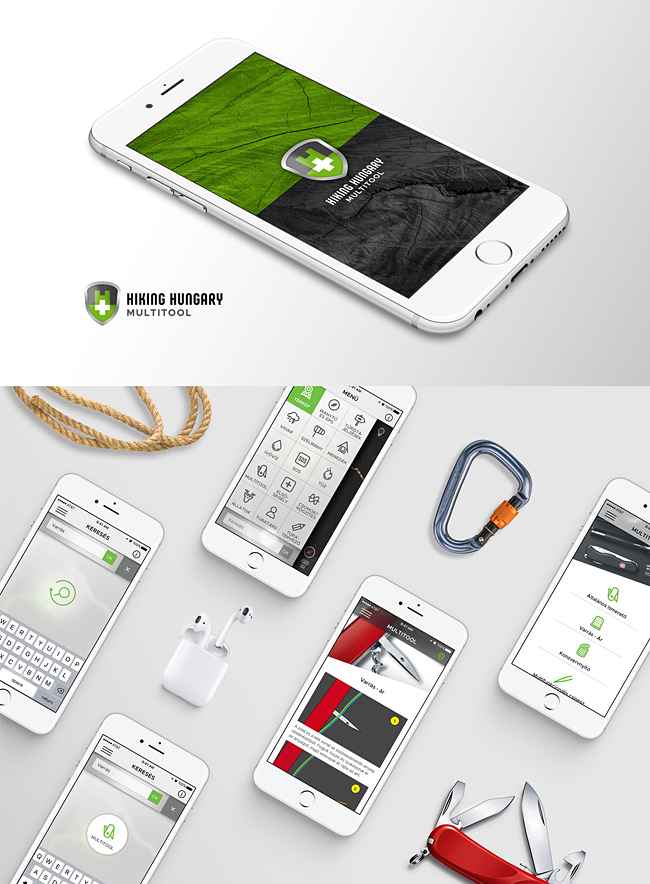
Hiking Hungary Multitool – H+
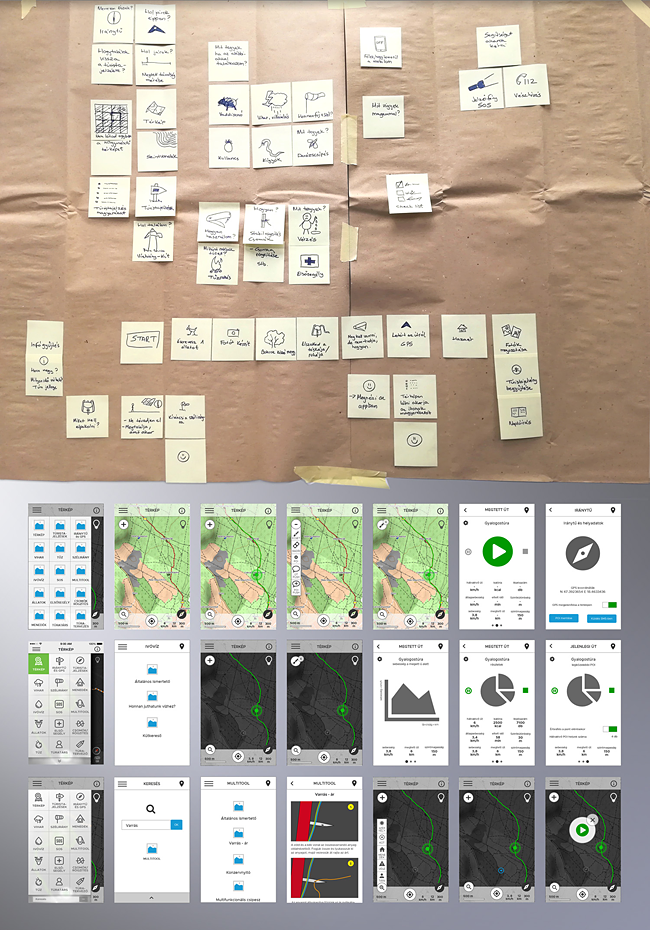
Affinity map, User journey & Wireframes
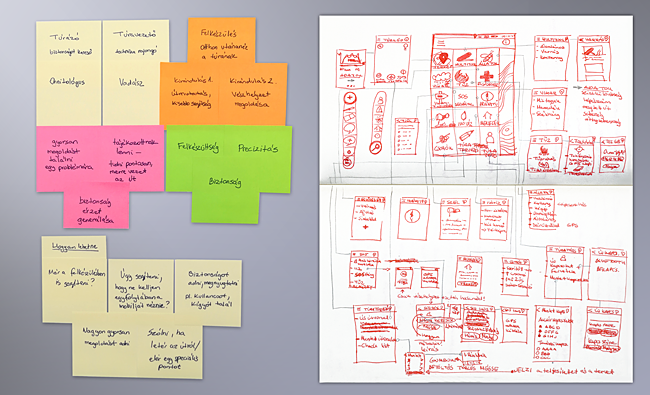
Design brief & Information Architecture

Crazy Eight exercise & Further Analyses
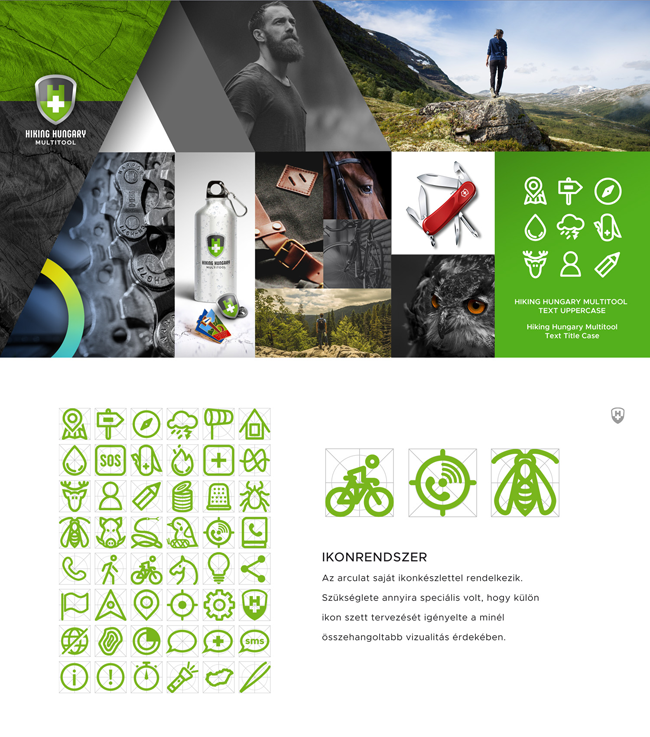
Moodboard & Icon Set
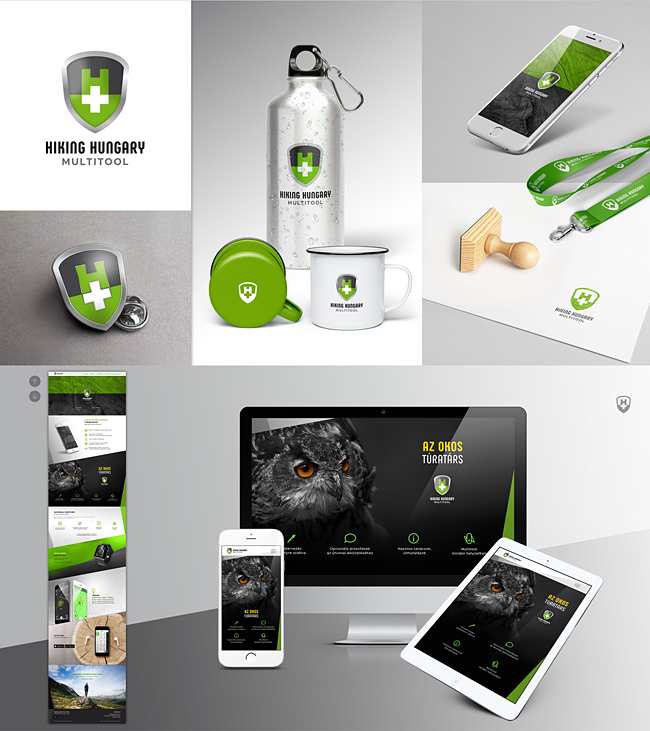
Brand: Logotype, Visual Identity, Website
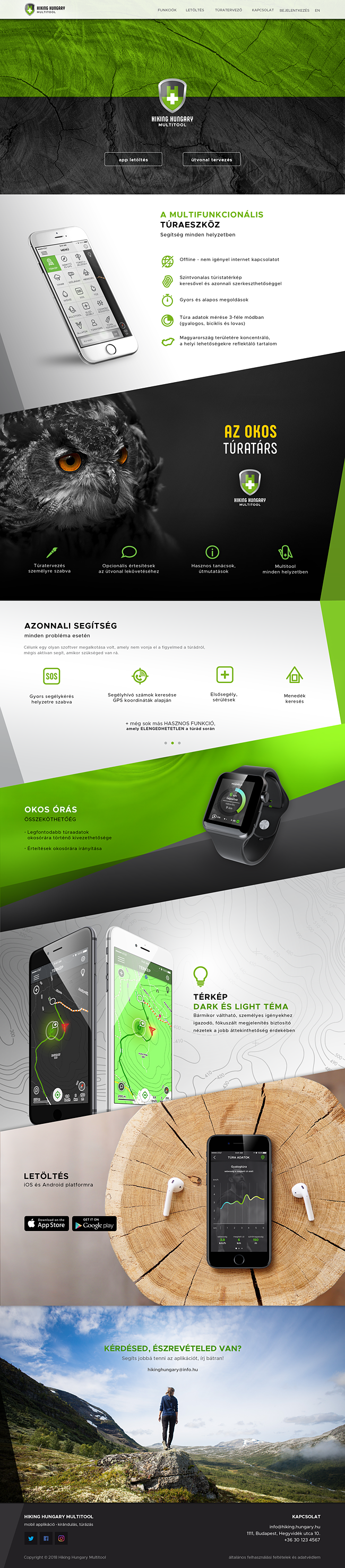
Website
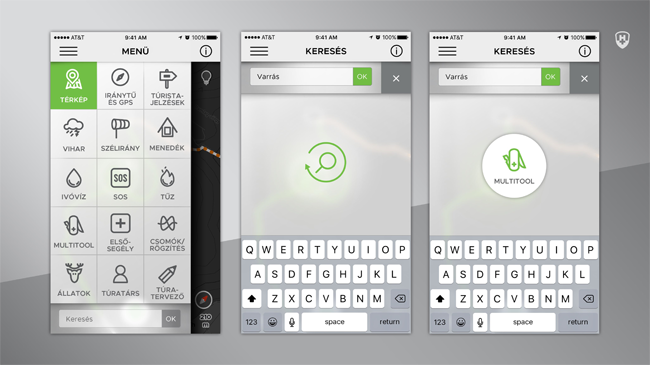
User Interface – Menu
The menu went through several iterations during user testing. Icon positioning and the placement of the search function were significantly improved based on user feedback.
Desktop research showed that users love multitool devices (Swiss Army Knife), but are often unaware of all functions. The Multitool section explains several use cases with illustrated guidance (e.g. sewing with an awl).
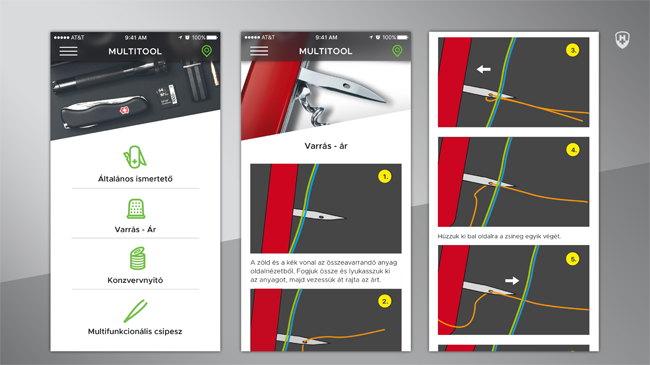
Multitool – Sewing
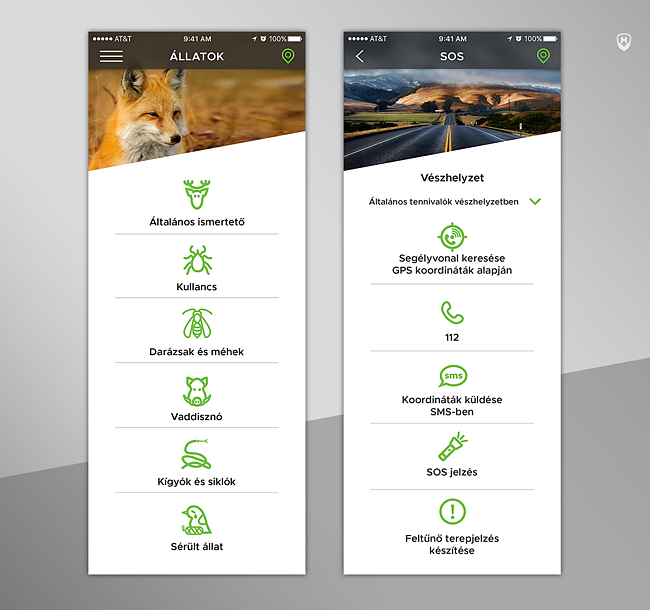
Animals & Emergency sections
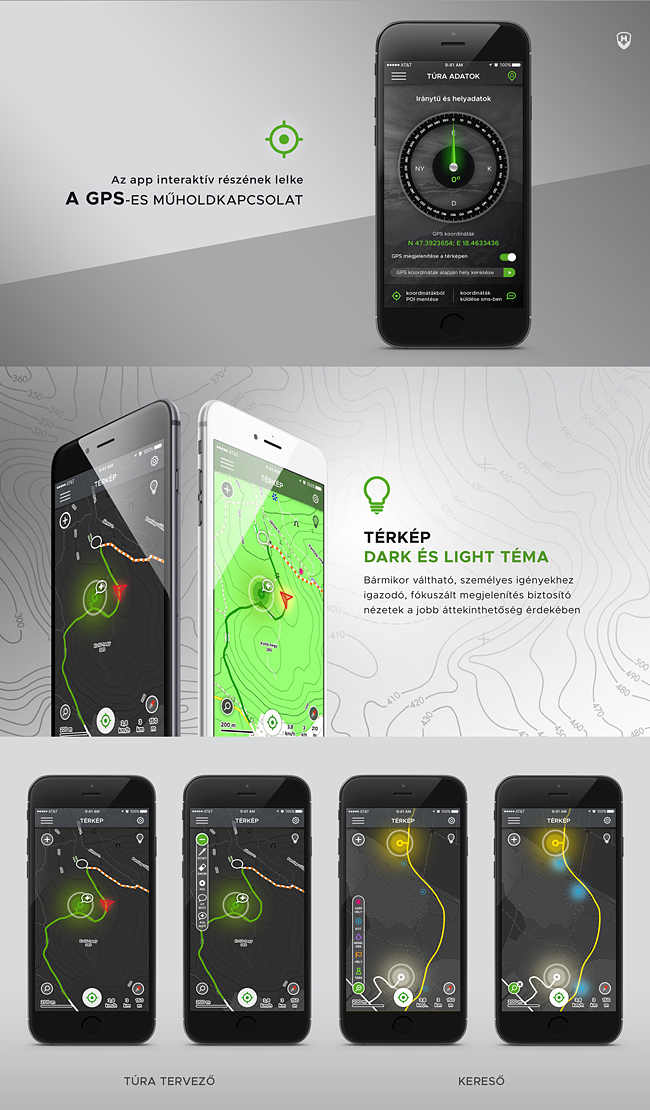
Navigation: Compass and Map
Based on user interviews, navigation became a key feature. A map pin icon is placed on every screen, navigating directly to the map.
A route planner allows users to define and follow trails either in advance or while hiking. Optional notifications follow Calm Technology principles (off-route alerts, arrival to checkpoints, etc.).
The map supports targeted searches, highlighting relevant results as you type.
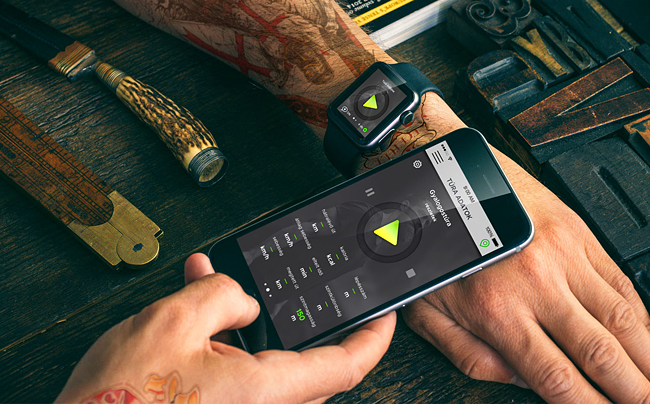
Hiking Data – Smartwatch Connectivity
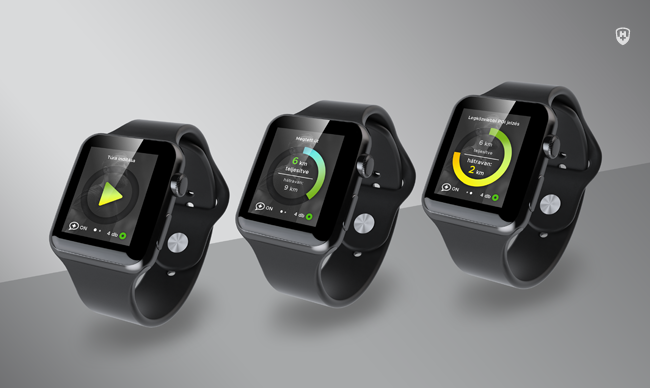
Smartwatch: starting and distance measurement screens
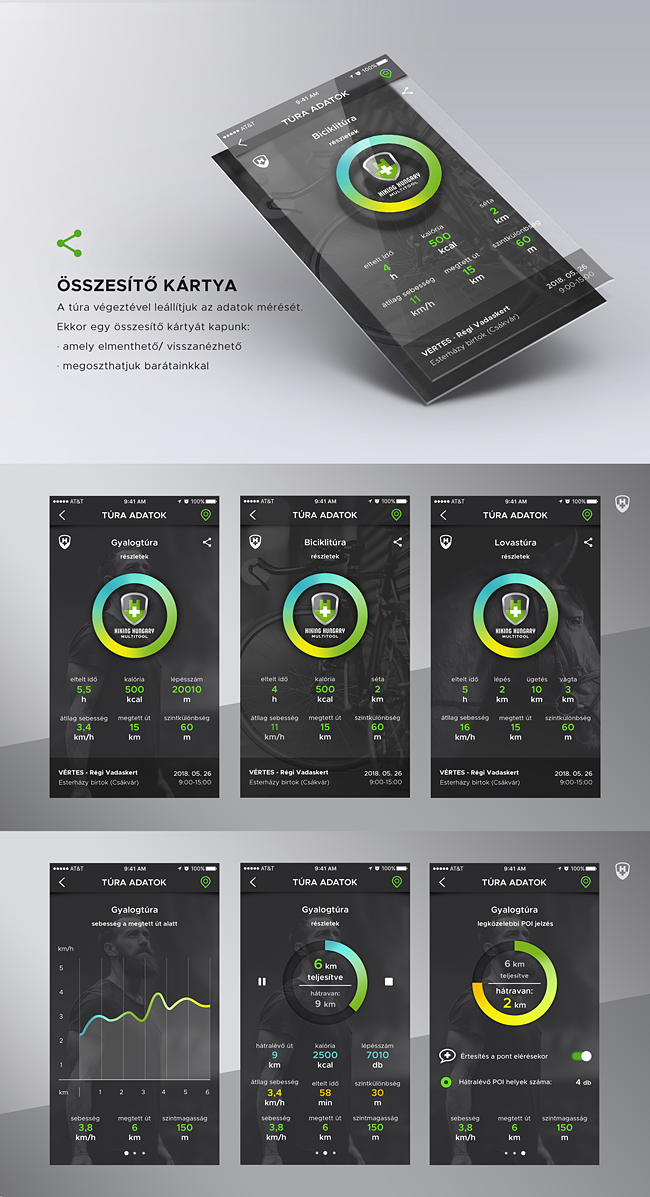
Smartwatch integration displays distance, elevation, and key hiking metrics. Summary cards store and share completed routes, creating a lightweight gamification experience.
Animated charts visualize essential hiking data.
Measurement modes: hiking, cycling, horseback riding

Tour data measurement: animated charts/graphs show the most important tour data
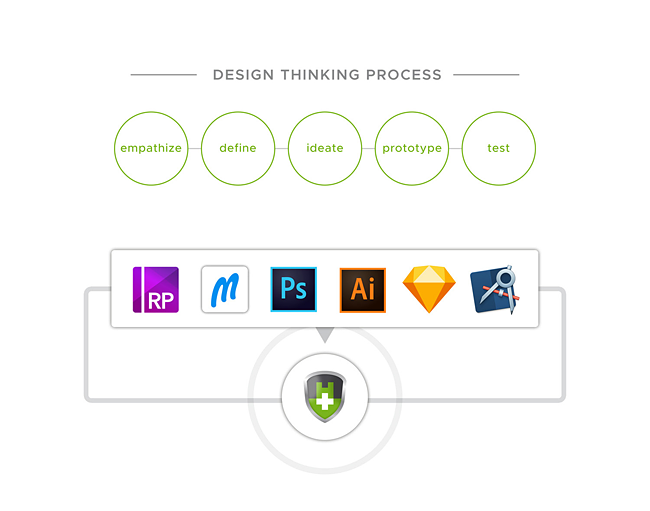
Design Method: Design Thinking and software tools used throughout the process
Exhibitions
· 2018 – XVI. Aranyrajzszög – Budapest, TESLA Gallery
· 2019 – Aranyrajzszög Selection Exhibition – Eger, Templom Gallery
· 2020 – 7Design Exhibition – Budapest, MKISZ Gallery, Andrássy Avenue

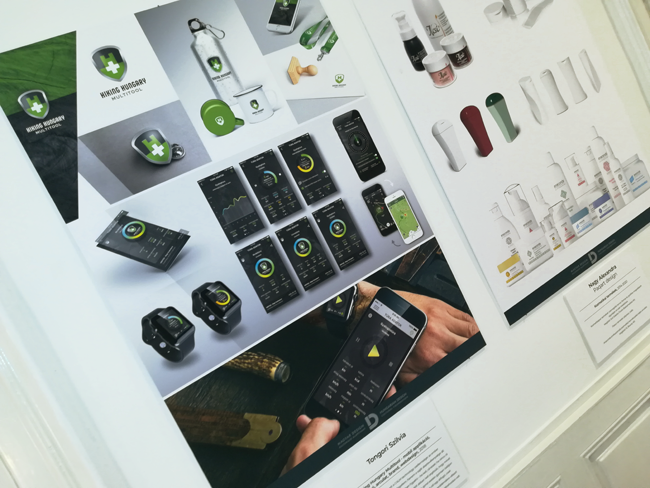

More References: UX/UI